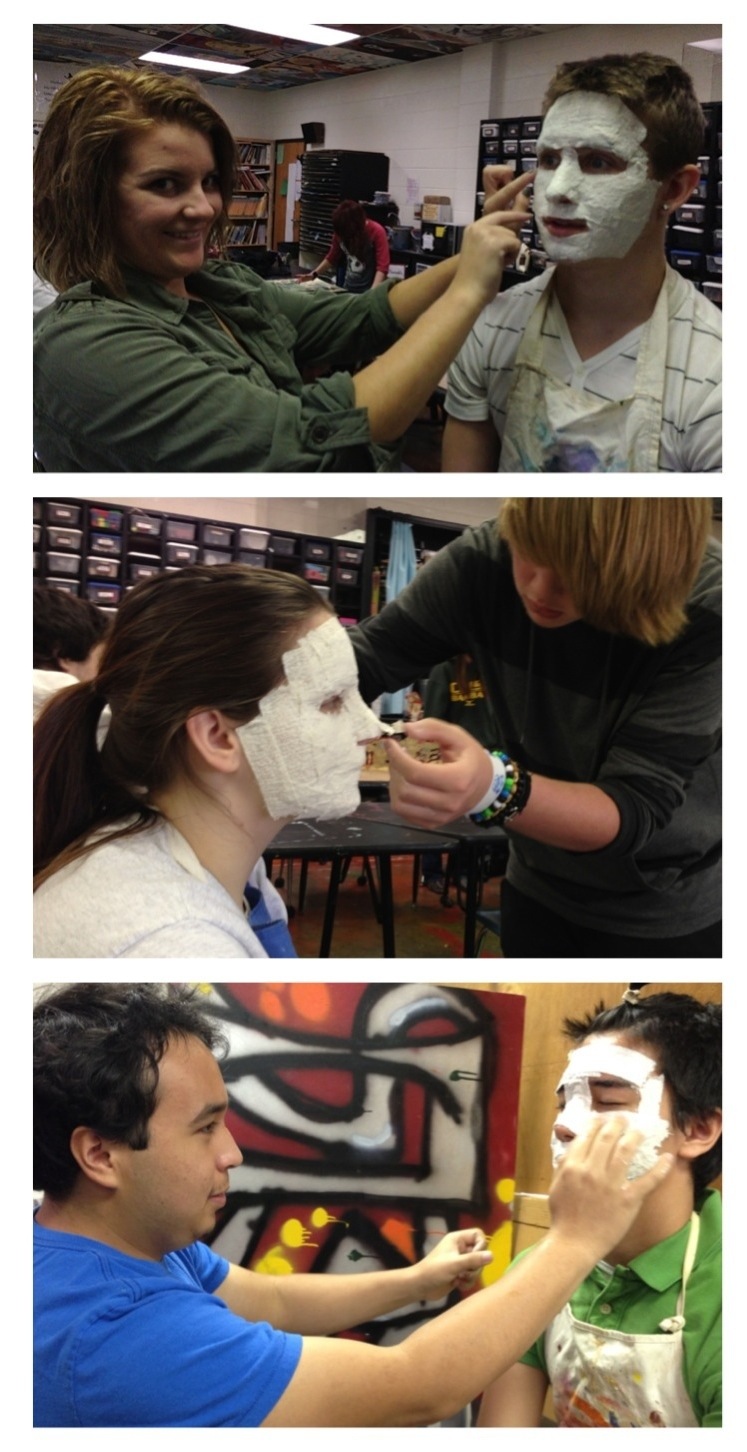
Students create plaster molds of their faces in preparation for Dios de los Muertos masks
04 Nov 2013 Comments Off on Students create plaster molds of their faces in preparation for Dios de los Muertos masks
Advanced students working on first round of proposal artworks! Can’t wait to see the finished art on Monday!
08 Sep 2013 Comments Off on Advanced students working on first round of proposal artworks! Can’t wait to see the finished art on Monday!
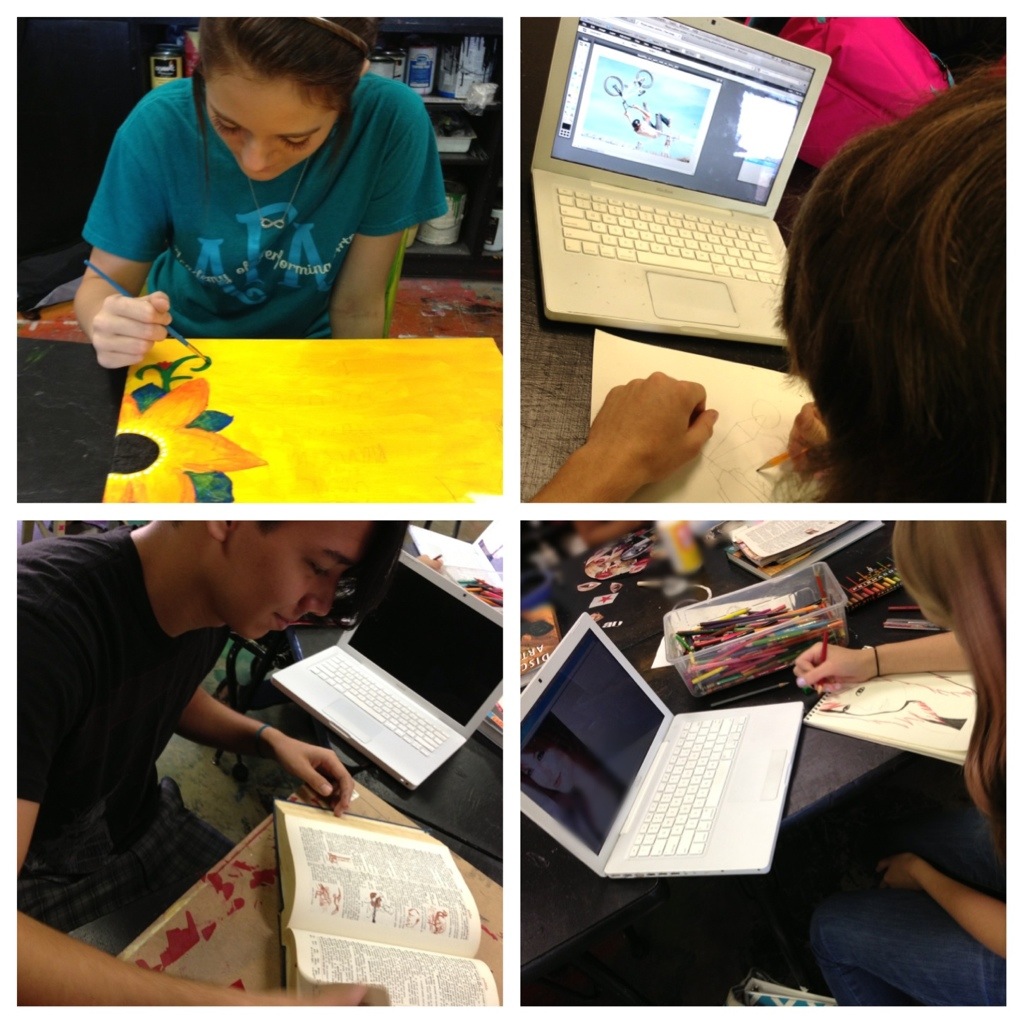


Qualitative Rubric: Proposals
03 Jun 2013 Comments Off on Qualitative Rubric: Proposals
in assessment Tags: Advanced Art, art rubric, assessment, assessment AS learning, grades, grading, proposal, proposals, rubric, self assess, shaping classroom culture
Proposals
| Above Standard | Student is choosing challenging and relevant artists to reference in his/her work. Student is completing 3 sets of thumbnail sketches—all good strong ideas for planned work. Students finished work demonstrates a clear relationship to the inspiration art. Student chooses an appropriate standard and shows evidence of accomplishing the essential standard through the process or product. Student understands how he/she accomplished the standard. Student consistently chooses challenging and varied subjects and media in his/her proposals. |
| At Standard | Student is choosing challenging and relevant artists to reference in his/her work. Student is completing 3 sets of thumbnail sketches—all viable ideas for planned work. Students finished work references the inspiration art. Student chooses an appropriate standard and shows evidence of accomplishing the essential standard (or making significant progress toward accomplishing the standard) through the process or product, but student may not fully understands how he/she accomplished the standard or may minimal need additional instruction to meet the standard. Student consistently chooses challenging and varied subjects and media in his/her proposals. |
| Approaching Standard | Student is choosing relevant artists to reference in his/her work. Student is completing 3 sets of thumbnail sketches—all viable ideas for planned work. Students finished work may need explanation to link the inspiration art. Student chooses a viable standard and makes significant progress toward accomplishing the standard through the process or product, but student does not fully understands how he/she accomplished the standard or needs additional instruction to meet the standard. Student sometimes chooses challenging AND/OR varied subjects and media in his/her proposals. |
| Below Standard | Incomplete proposals. Proposals do not address required criteria, do not include all required thumbnails, reference artists, research. Student does not address or make progress toward essential standards his/her work. Student chooses the same subject matter repeatedly regardless of its contribution to his/her growth as an artist. Student does not challenge themselves. |
Student Gallery: Amanda, 7 Deadly Sins.
30 May 2013 Comments Off on Student Gallery: Amanda, 7 Deadly Sins.


Student Gallery: Antonio, Urbanscapes
29 May 2013 Comments Off on Student Gallery: Antonio, Urbanscapes


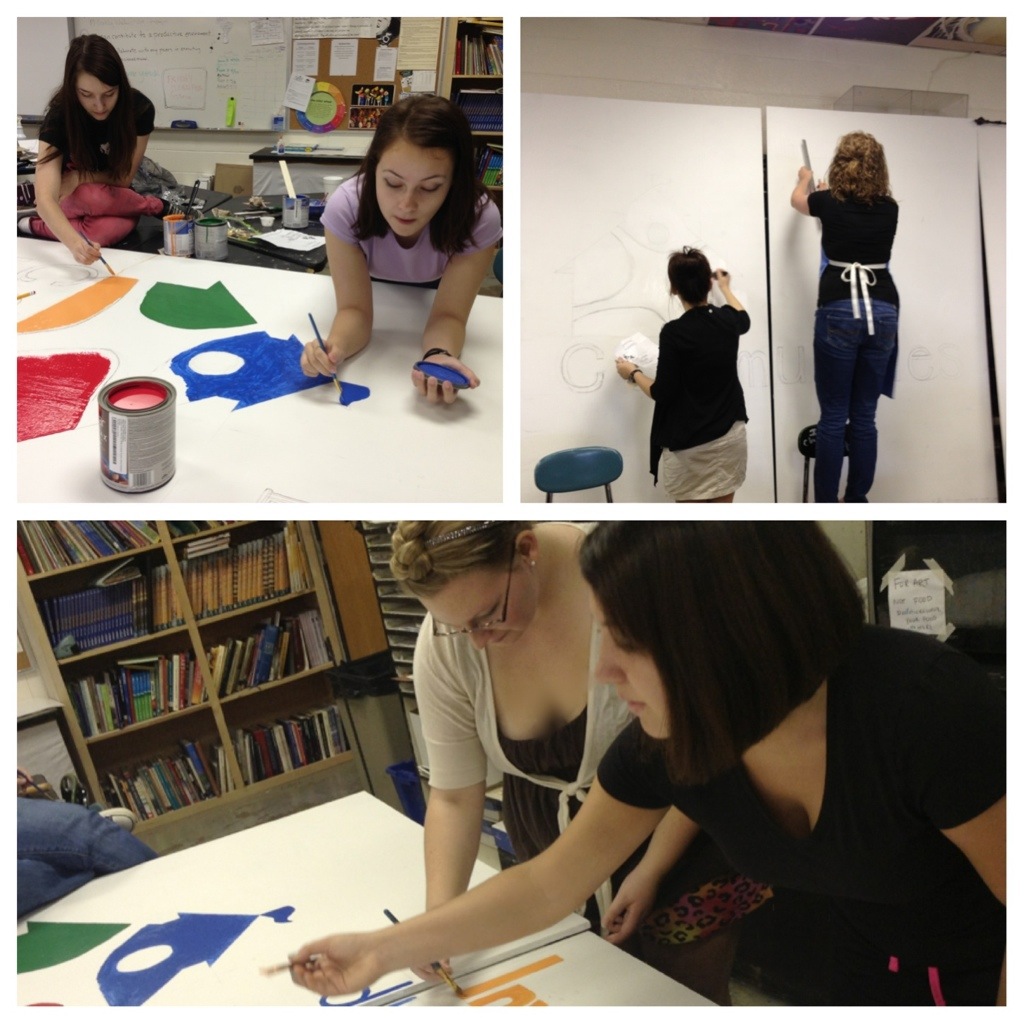
Art students paint a mural for Communities in Schools, to be displayed outside of Pleasant City Woodfired Grill.
23 May 2013 Comments Off on Art students paint a mural for Communities in Schools, to be displayed outside of Pleasant City Woodfired Grill.
Not Exactly Mona Critique Prompt
02 May 2013 Comments Off on Not Exactly Mona Critique Prompt
in photography, Resources Tags: Advanced Art, art criticism, assignment, Assignments, mona lisa, mspdgtt, photography, Studio Art Courses
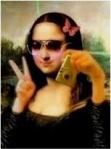
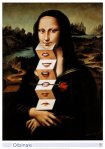
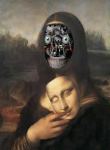
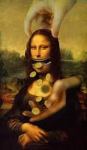
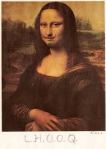
Select 1 of the images provided. Copy text below into your own blog. Under each heading (Describe, Analyze, Interpret, Judge) respond to the statements and erase the “directions” text. Post the image you choose and your 4 part Critique to your own blog.
Describe
This stage is like taking inventory. You want to come up with a list of everything you see in the
work. Stick to the facts. Imagine that you are describing the artwork to someone over the
telephone. Express what you see in detail.
Analyze
Try to figure out what the artist has done to achieve certain effects. Consider different elements
and principles used by the artist and why the artist might have chosen to incorporate these
essentials.
• Questions to consider:
o Use the vocabulary you learned in class. For example, if you’re looking at mostly
red, yellow and blue refer to the colors as primary colors.
o How are the elements of art (color, shape, line, texture, space, form, value) and
the principles of design (balance, harmony, emphasis, movement/rhythm, unity,
variety) used in this artwork?
o What do you notice about the artist’s choice of materials?
o What grabs your attention in the work, why?
o Do you see any relationship to the things you listed during the description stage?
Interpret
Try to figure out what the artwork is about. Your own perspectives, associations and experiences
meet with “the evidence” found in the work of art. All art works are about something. Some art
works are about color, their subject matter, and social or cultural issues. Some art works are very
accessible — that is, relatively easy for the viewer to understand what the artist was doing.
Other works are highly intellectual, and might not be as easy for us to readily know what the
artist was thinking about.
• Questions to consider:
o What is the theme or subject of the work? (What from the artwork gives you
that impression?)
o What mood or emotions does the artwork communicate?
o What is the work about; what do you think it means or what does it mean to
you? (What from the artwork gives you that impression?)
o Why do you think that artist created this work?
Evaluate
This is a culminating and reflecting activity. You need to come to some conclusions about the
artwork based on all the information you have gathered from your description, analysis, and
interpretation.
• Questions to consider:
o What are your thoughts on the artwork based on the three steps above and why?
o Why do you like or dislike the artwork (explain).
o What have you seen or learned from this work that you might apply to your own
artwork or your own thinking?

 Art Is Good